Foulkes Lecture 2010
THE ISLANDS OF THE BLEST
Group Analysts and their Groups
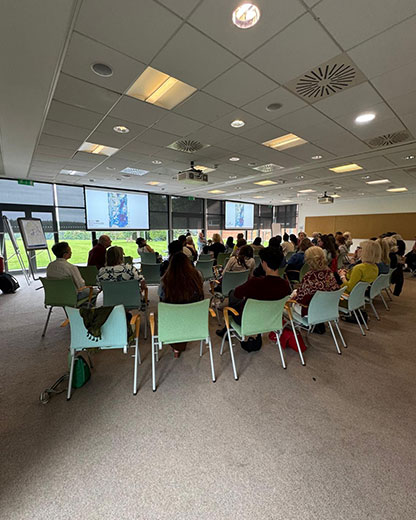
14th May 2010
Brunei Gallery, London
Speaker: Jane Campbell
Respondent: Sue Einhorn
In Greek mythology these islands were peopled by mortals favoured by the gods and thus released from the depredations of labour and of time: “happy heroes for whom the grain-giving field bears honey-sweet fruit”. In war-torn Europe Foulkes developed his ideas for a therapy whose underlying philosophy was one of freedom. Within their protective boundaries, group-analytic groups were to be free of structured time, with no agenda, no set task, no expectation of ‘closure’ or ‘understanding’, no goal of adjustment or socialization. Distancing himself from the medical model based on “normality, illness and cure” he offered a setting within which the creative function of the therapist would enable group members “to become themselves, to lead a fuller life, to make use of happiness and to avoid adding too much further suffering to their miseries”. Can this language make sense to group analysts working within the task-focussed, evidence-based, time-limited, treatment-oriented, closely monitored psychological therapies of our time? If Group Analysis is both an art and a science and if it is more than merely a technique and since Group Analysis embraces many languages, which will in turn determine not only what group analysts think and do, but what they look for and what they find, we may need to ask, as we place today’s heroes in our groups, whether the language that Foulkes used still has any meaning or relevance today.
Download Foulkes Lecture Information
Download Study Day Information
Latest Information. 19th April 2010:
Foulkes Lecture: there is room for all those wishing to attend to do so but please note that tickets will not be sent out until late April.
Foulkes Study Day: the event is now fully booked and there is already a waiting list. For those on the waiting list the situation will be reviewed again next week.
Mentalizing the Matrix. New Perspectives of ´Ego Training in Action`
Thursday 29 October – Sunday 1 November 2009
Venue: The Institute of Group Analysis, 1 Daleham Gardens, London NW3
It is more than fifty years since Foulkes first described the process of group analytic psychotherapy as ´ego training in action` (1957). Drawing from the insights of self psychology and the object relations approach, the concept was taken up and reworded by Dennis Brown who spoke of ´self development through subjective interaction` (1994). Meanwhile our understanding of the metapsychology of the ego and its actions within the therapeutic process in indvidual and group analysis has become enriched even more by the findings of attachment theory as developped by Bateman, Fonagy, Main and Target and also by recent research into the neurobiological foundations of attachment behaviour, affect regulation and memory systems.
The 38th Autumn Workshop on ´Mentalizing the Matrix` will address these developments. It is a clinical wokshop intended to offer ´ego training in action` for the participants. This includes lectures & panels on mentalization based treatment (MBT) as well as the opportunity to experience it in small groups guided by a team of international colleagues who have pioneered its application in groups and group analytic practice. Also, the workshop will offer a chance to explore the interface of MBT and its clinical value in comparison to more traditional ways of group analytic work.
Can Group Psychotherapy Survive NICE?
Examining the Evidence
29th January 2010
120 Belsize Lane, London
Downloadable Papers To Be Discussed at this Conference
Final Report of Systematic Review of Research
Further Background Reading:
In January 2009, NICE commissioned Professor Sir Ian Kennedy to conduct a short study of valuing innovation in relation to new health technologies (including psychotherapy). Many HGI members were involved at various stages of his consultation, either in an individual capacity or representing the HGI; Bill Andrews (who runs the HGI's Practice Research Network) sent in a submission on behalf of HGI and several others attended consultation workshops.
In his final report, Sir Ian drew attention to the particular problems involved with assessing new psychological therapies:
"As regards psychological therapies, there are clearly differences, as against pharmacological therapies, in what might constitute evidence of clinical effectiveness and how such evidence might be generated. The RCT is most suited to establishing the effectiveness of drugs, not least because the trial can be properly 'blinded' and the role of the therapist in the effectiveness or otherwise of the therapy is less significant, compared with psychological therapies. That said, NICE cannot issue guidance without having some sound basis on which to proceed. Moreover, it is unlikely that a real understanding of the comparable effectiveness of a psychological therapy can be established without some form of trial. CBT (Cognitive Behaviour Therapy) has led the way in this acceptance of the value of trials and other forms of psychological therapy need to follow. NICE is conscious of the need not to privilege one form of therapy, simply because it can produce evidence from RCTs. What is needed is a systematic approach to evidence which is appropriately flexible and combines 'observed practice' with valid trials, moving from the former to the latter and then back to observed practice as further validation. Critical to the success of such an approach is both the need to collect data from practice and bring it together with data from other centres in the NHS, and the need to organise trials.
"NICE needs to emphasise the need for the development of evidence of effectiveness and work with others to ensure that a proper research infrastructure is put in place. NICE might well seek to work with the newly established Academic Health Science Centres (AHSCs), or Collaborations for Leadership in Applied Health Researchand Care (CLAHRCs) to make psychological therapies one of their research priorities, given the AHSCs’ mission both to conduct research and to take the fruits of that research into the NHS locally and beyond. I am aware also that NICE is working with the Medical Research Council on research into the use of different types of evidence in its appraisals, such as 'colloquial' evidence and non-experimental evidence from disease registers."
The NICE Committee's response to Sir Ian's recommendation (point 25) were as follows:
Sir Ian Kennedy's recommendation:
NICE should work with others, particularly academic health science centres, to ensure that a sound infrastructure for research in to the effectiveness of psychological therapies is established.
NICE's response:
Building research infrastructures is beyond the Institute’s remit. This is a matter on which the Department of Health may wish to respond.
Sir Ian Kennedy's recommendation:
NICE should work with others to develop a systematic approach to evidence regarding psychological therapies, including the place of RCTs and non-experimental evidence.
NICE's response:
The Institute recognises the value of different forms of evidence and sets out its approach to their interpretation in its Guide to the Methods of Technology Appraisal.
In the preamble to their response, NICE commented (3.11): "In proposing these arrangements the Institute is conscious of the need
to avoid placing an intolerable burden on the NHS especially at a time when resources are likely to be severely constrained."
NICE subsequently invited comments on Sir Ian's recommendations and the HGI and many of its members responded in support of his point 25 and to highlight the many benefits (including cost-effectiveness) of rigorous practice-based evidence (RPBE).
The response of HGI member Shona Adams, a chartered clinical psychologist, is particularly well argued and detailed – click here to read it – and we thank everyone who took the time and trouble to respond. We are all hoping that NICE will look again at Sir Ian Kennedy's recommendations in relation to assessing new psychological therapies and that they will widen their scope of acceptable forms of high-level evidence of efficacy to include robust practice-based evidence.
Further Useful Links: