

Student power and generational conflict through a decolonising lens.
Abstract from the booklet of the Summer School:
Thinking critically about teaching structures as well as students finding their voice can be crucial in developing a progressive learning culture where everyone benefits and grows. This talk aims to link institutional hierarchies with power dynamics between ‘teachers’ and ‘students’ as well as different generations through a decolonising lens. Hypotheses about conscious and unconscious processes are shared and the audience is invited into a conversation to stimulate further exploration in the experiential groups of the Summer School.
Introduction
I was asked to share some thoughts at this year’s Summer School (2025). As I prepared my presentation I inquired, “so what do you want me to talk about?” The reply from a senior group analyst was, “you can talk about whatever you like”. At the end of our conversation, I asked if I should send the presentation beforehand. The answer was, “you can but you don‘t have to, I trust you completely”. Why am I telling you this? Because it is an example of a student-teacher relationship modelling a different kind of authority, one that gives space to find your own voice.
The goal of my presentation is to link four different aspects: I would like to reflect on teaching structures and hierarchies as well as generational conflict in institutional power dynamics. The potential students have is central in my talk and how it can be harnessed so that the whole system can benefit. A hypothesis I would like to suggest is whether decolonising offers a way of solving generational conflict and serves as a way of utilising student power as a means of rethinking teaching structures.
Focus 1: Teaching structures
Training institutions such as universities or group analytic training institutes are part of the capitalist system. Managers run the institutions as businesses; they have authority and hire teachers who then exercise power. There is a hierarchy: The teachers are the ones who ‘know’ and they pass on so called ‘knowledge’ to students, the ones who ‘don’t know’. It is a bit of a simplification, but it highlights something. Students are often seen as sources of fees and ‘satisfied students’ or customers as an outcome of their studies or training. Students pay to get a certain degree and a ticket to serve and compete in the dominant social order and market. And of course, teachers are employees and deal with pressure from above. They are also seen and challenged by the students, the managers usually not.
When we think about teaching structures, it is important to reflect on what to teach and how to teach and how to learn! Furthermore, how is assessment carried out and how are degrees awarded? Another way to put it in relation to the context of group analytic training institutions is: does it make sense to write a clinical paper at the end of the training? Are academic writing skills important to be a good group analyst? Is writing privileged over clinical practice? In terms of power dynamics, it can be interesting to look at whose clinical papers get passed and whose does not.
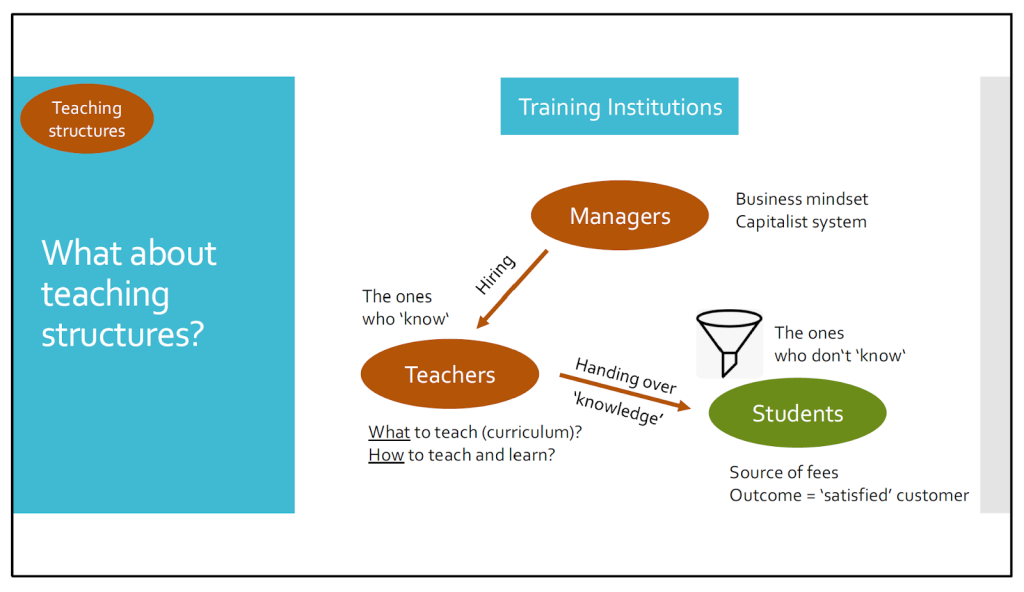
Figure 1. Teaching structures in training institutions
Paulo Freire, a Brazilian educator and philosopher wrote a book in 1968, Pedagogy of the Oppressed. In his book, he compares interactions between teachers and students to the transactional banking system wherein education becomes an act of depositing, in which the students are the depositories and the teacher is the depositor. The students receive the information (like money in a bank), memorize it, and repeat. He also says, this dehumanizes and conditions students to believe professors know everything and they know nothing. Freire also stated three reasons why ‘The banking model of education’ is no longer effective today because students don’t get to think critically about their education, they don’t engage in the classroom, and don’t feel the need to ask questions in class.
According to Freire, the absence of questions and answers, or even open debate in a classroom creates a ‘slavish’ mentality. Teachers who see themselves as the sole possessors of knowledge, and their students as empty vessels in need of filling, perpetuate a sort of ‘colonisation’ culture where the dominant culture is correct and valuable, and the victims of this colonisation considered ignorant and inferior – ‘savages’ in need of ‘saving’. When it is extreme, it is a one-way communication.
Freire articulates that a teacher’s purpose should be to support and develop the student’s sense of self, which makes them less easy to be dominated, and more likely to stand up for themselves and their own dignity. This, of course is not in the interest of the ‘oppressors’. The oppressor’s goal is only to conform the mindset of the oppressed – not to address the conditions that are oppressing them.
It is important to note that Freire uses a certain vocabulary here which can be seen critically. Students are not slaves; they also have a choice and are not completely powerless. And teachers are not brutal, colonial slave owners. It is nevertheless a metaphor which can lead to thoroughly examining the hierarchy within teaching structures.
I would like to invite the audience or the readers to reflect on the following questions: When we think about teaching structures and hierarchies, is there a need to ‘decolonise’? I think so! But what does it mean and how can it be done thoughtfully and meaningfully? It is way easier to decolonise what is taught and to think critically about the curriculum. It is much harder to decolonise the teaching structures, and what is seen as knowledge, how skills are taught, how students learn, how progress is measured, how degrees are awarded, etc.
So, Freire’s critical pedagogy promotes a two-way dialogue: ‘The teaching must begin solving the teacher/student contradiction, by reconciling the opposite poles, so that both parts are both teacher and student at the same time, and in such a manner that the student’s creative ability isn’t belittled or destroyed, and their credibility enhanced.’ He argues that the teacher and the student should be on equal footing providing for a two-way exchange of sharing knowledge in both directions.
Freire’s idea – which I like very much – is that the teachers are students as well and the students are teachers. With this view a progressive learning community of dialogue can be created where everyone thinks, struggles and learns together. Freire states that students will be more confident to ask questions during class and interact with class discussions. This will allow students to think outside of the box, and interact with the lesson, rather than retrieving information like a robot.
Instead of teaching one could also say ‘sharing’ in the sense of: ‘Look, I do it this way, maybe that is helpful to you, but you will find your own way of doing it’. One can easily apply this approach to supervision in different kinds of training. A parallel can be seen to therapy where the patient is the ‘student’ and the therapist is the ‘teacher’. Not long ago, one of the members said in one of my group therapy sessions that I am sort of a teacher in the ‘school of life’.
Here is an illustration of such a communicative relationship between a student and a teacher:
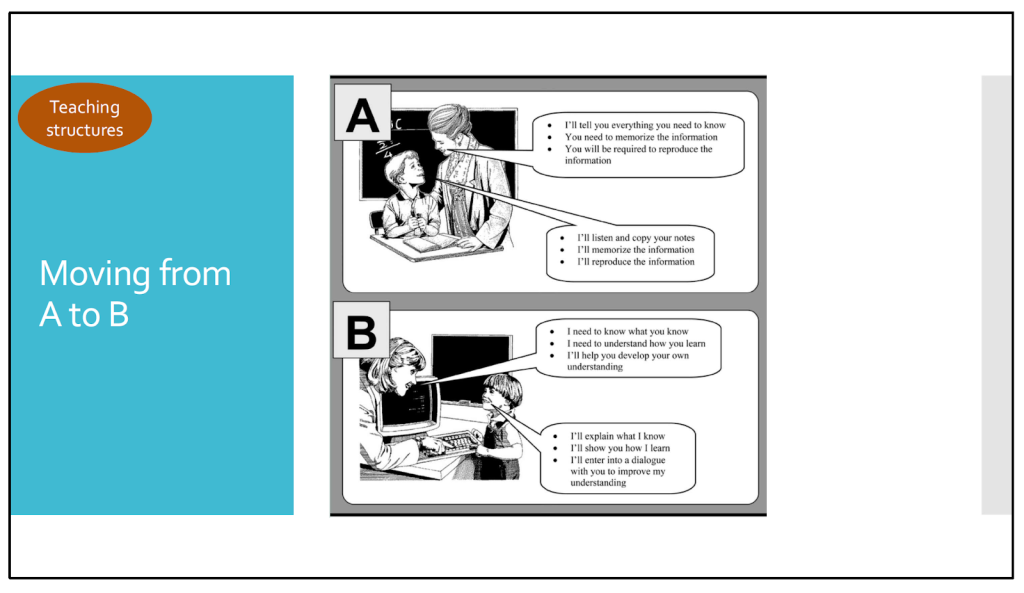
Figure 2. Progressive learning relationship between a teacher and a student according to Freire
Focus 2: Student power
Both sides, teachers and students, need to be on board with creating a shared learning community. Students can find their voice and bring it into the institutions. But they need to be invited in, or they need to claim power but that is not so easy sometimes. It can be a battle. I know the following table is binary and it is way more complex, but: On the left, you can read about active students. One could also say the more radical or progressive are the ones who take responsibility for their own education. They have the capacity to think critically about power, position and privilege (PPP) and they question the status quo. On the right, you can see a conservative position – keeping the status quo is important – which is more passive and compliant in the sense of students thinking and conveying: ‘tell us what we need to know, help us pass the exams and give us our degrees’. I have seen many fellow students in my group analytic training with that mindset. They were also much faster in finishing.
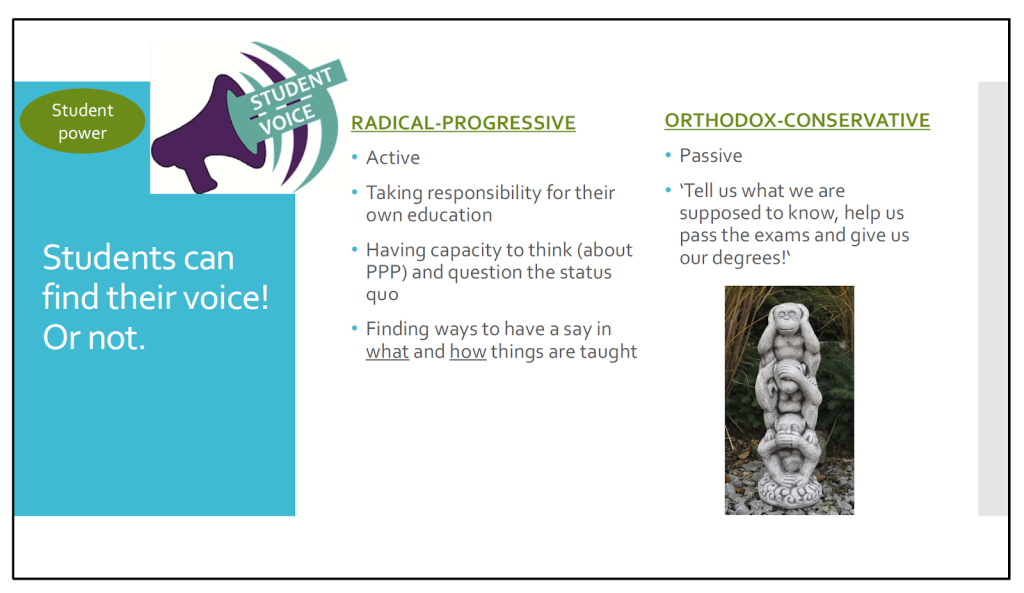
Figure 3. Student power: Ways in which students can find their voice (or not)
Being active seems to be better, but: Why bother to be involved? Why bother to put in extra thinking, extra effort? Why do more more and have extra responsibility? Is it worth it? I would like to hear what you think.
One idea is: ‘Dig where you stand’ – change the bit of the world where you are, engage with people close to you, your family, friends, your neighbourhood, your practice, your clinic, your institute, the organisations you are part of. That has an impact, it matters!
Another idea is: ‘If there is no struggle, there is no progress’ which is a quote from Frederick Douglass, an Afro-American activist who escaped from slavery.
It might sound idealistic but for me actively engaging with teaching structures and ways of learning is about:
- Becoming a responsible citizen and improving the world
- More justice, fairness that everyone can benefit from
- Mutual growth
- Raising awareness, also to avoid power abuse by being in an ever-evolving learning community
- Not ignoring, denigrating or trivialising the knowledge and skills of subgroups who are oppressed, marginalised and silenced (Nicholas Jones, personal communication) – but that scares the privileged!
Focus 3: Decolonising
I prefer saying decolonising instead of decolonisation because decolonising emphasises the nature of an ongoing process, a continuous effort that is necessary to reflect on structures of domination.
Before thinking more about decolonising, it is important to understand what colonisation is. We have heard about Frantz Fanon and his highly relevant thinking and writing from Erica Burman. In my contribution, I would like to share a video of Trevor Noah, a South African comedian who lives in the States. The title is ‘How the British took over India’ – easy to find online – and some of you might already know it. The link is the following:
https://www.youtube.com/watch?v=QhMO5SSmiaA
I am still grappling with the question what decolonising means, what or how to think about it. When you google the following terms you find definitions like this:
- Decolonisation: Colonies becoming independent from the colonising country – but it is much broader than that: it requires dismantling power and structures of domination!
- Decoloniality refers to the process of breaking free from the rules and hierarchies imposed by a colonising entity, particularly in the context of knowledge, data, and information.
I feel that the process of decolonising is complex and challenging. I cannot tell you how it is done but would like to invite you into a conversation. What Trevor Noah talks about is funny, but actually, it is not funny at all, it is violent and cruel. Also, this conversation he depicts could have never happened in English, the coloniser’s language. I don’t think colonisation can be reversed or can be easily undone as in ‘becoming independent and breaking free’. But I want to believe that over time it is possible for both sides – the colonised and the colonisers – to integrate the collective trauma of colonisation and possibly to even make creative use of it.
Colonisation over several hundred years influences so many or maybe every aspect of the people who are affected by it, be it language, religion, values, work ethics, sexuality and so on. It is woven into our beings over generations. It‘s like when you weave a carpet. You cannot simply take one thread out. If you do that the whole structure unravels, comes undone. To unlearn is so much harder than to learn something new.
So, thinking about power, position and privilege, I ask myself different questions:
- What is my own position in society as a white European analyst?
- Why do I think decolonising is important?
- What does it mean to be part of the dominant culture versus an oppressed one?
My colleague and friend, Bineta Thiam, helped me a great deal to think about this territory, to even ask the right questions. I am grateful for that, but I also caught myself enacting racist and exploitative dynamics: in the presentation in the Summer School and the first version of this paper, published in Contexts, I haven’t mentioned her and the conversations with her which taught me so much. After she confronted me, I sat with the shame, took responsibility and made sure I would publish a second version in which I acknowledge her contribution. This is an example of ‘dig where you stand’: It makes a difference how everyone of us is in the world, how we relate to people and shape the power dynamics around us.
White people need to look at their complicity in a system that is not sustainable. There are communities who talk about a ‘system’s collapse’. This is not new because climate change or global warming is real and the global North is mainly causing it. The global South pays the price, many places will become uninhabitable, and the global North tries to push migrants out as you can see with all the right-wing movements in different countries. This dynamic will not go away, it will increase.
Decolonising is or needs to be an ongoing dialogue and a praxis, it is not a result we can easily achieve with ticking boxes of an agenda. It involves questioning established theories and discourses and empowering subaltern voices, so, it will rock the boat. This process is irritating because it questions the lens through which we see the world. We might discover that the lens we have is distorted. Realising that is highly uncomfortable or to be more direct: it can be terrifying and unsettling.
The reality is complex and as analysts and group analysts we work with the unconscious and social unconscious. There are colonising and colonised parts within ourselves, in our groups and they can play out in many ways. The ‘potential for … re-enactment is ever present’ (Blackwell, 2023a, p.9).
There is also a danger of decolonising being fetishised in a cliched terminology such as ‘diversity, equity and inclusion’ (DEI) and becoming colonising in itself. It could become dogmatic and prescribed or a top-down process which is not the goal.
Focus 4: Generational conflict
In this forth section, I would like to share a few thoughts on what intergenerational tension in institutions could be about: When I say students or ‘junior colleagues’ I mean new voices in the professional community. That is not necessarily age-related. You can be 60 and new to group analysis. The same is true for the established and experienced members; there is an age range.
I assume the new voices want to learn and want to be heard. It is important to be included and taken seriously. By included I also mean invited to take part in decision-making processes. The motivation to learn is much higher as a result. There can also be a conviction in the newer generations to do things better than the previous generations, the wish for change and improvement. That can entail claiming power and the wish and impulse to take over or to ‘kill off’ the seniors.
In order to have a fruitful intergenerational dialogue and culture, it is important to relinquish the need for a ‘murderous coup’. On the other hand, I think of power relations in general: the powerful don’t give up power unless it is wrested from them.
The experienced colleagues may wish to be acknowledged, and their legacy appreciated and remembered. There might be a fear to be criticised, replaced and ‘murdered’ as the new generations can be envied and seen as a threat. Or, is the wish for change that is pushed by the new voices met by an openness to change by the ones who are established in the system? An example that often comes up when we meet on screen: there are different feelings and attitudes towards the chat function in online large groups. I have written about it elsewhere (Puschbeck-Raetzell, 2023, in response to Blackwell, 2023b).
This relates to the so-called ‘Laios complex’. The Oedipus myth is well known but the parental perspective is often neglected. In short: Laios, the father of Oedipus, is alarmed by the prophecy that his son will kill him. Therefore, fuelled by the oracle and his fear of death, Laios abandons Oedipus and wants to have him killed. As we know, Oedipus lives and the prophecy comes true.
Leopold Morbitzer (2024), a German colleague, writes in his book: The Laios complex contains the ambivalent attitude of parents towards their offspring. It can be seen as part of the ‘parental unconscious’ (Jean Laplanche). The Laios complex closely links the question of generativity and dealing with offspring to older people’s confrontation with their own mortality (see Figure 4).
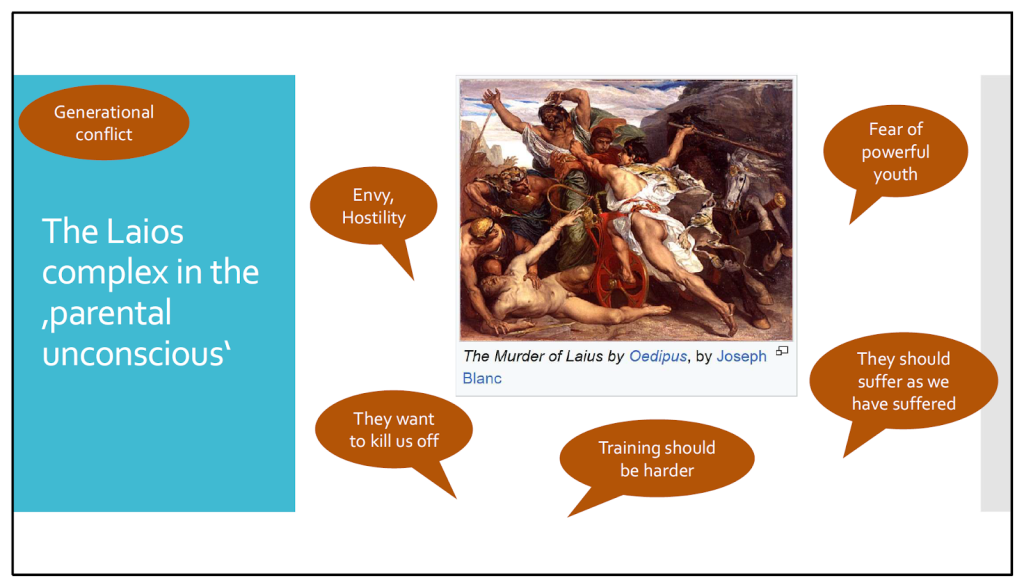
Figure 4. Generational conflict: The Laios complex in the ‘parental unconscious’
In 2024, Lydia Kruska, a colleague and friend of mine, and I published an article on the parent-child metaphor as an expression of power dynamics at psychodynamic institutes. The family metaphor comes up a lot in our training settings, teachers/trainers as ‘parents’ and students/trainees as ‘children’ who need protection. That might be true and can be beneficial in some ways, but transference interpretations are not always helpful, on the contrary, they can be quite damaging, infantilising and out of place, especially in groups.
I know it is obvious but students, especially in group analytic training, are not kids! They are adults with substantial life and job experience, and sometimes higher academic qualifications than their teachers. There are a power differential and a hierarchy that cannot be denied. But there is also an interdependence: without a student there is no teacher and vice versa. Questions of legacy and succession, the survival of institutions and organisations play an important role as well.
One aspect we highlighted in the article in 2024 was that there are two lines of thinking and they tend to get mixed up: we called it the ‘analytical’ and the ‘real-factual’. The ‘analytical’ is related to the transference-countertransference relationship and the aim is to allow for a personally therapeutic experience, individually or in a group. The ‘real-factual’ means that there are clear responsibilities and dependencies: there is a contract with certain rules and conditions, a legal transaction, a payment and a qualification at the end. It is helpful to have these two dimensions in mind, especially while working with groups and in organisations.
I want to include a vignette from the group analytic community. Many of you will know EGATIN, the European Group Analytic Training Institutions Network. One of the reasons for founding this network of institutes was to decentralise group analysis from London in the 1980s, to diversify the professional landscape. GASi was still GAS London at the time, it changed its name to GASi in 2011.
Encouraged by the leadership of EGATIN at the time, I co-founded an international student group (ISG) across countries, cultures and institutes in 2020. This links back to a vision of Foulkes: ‘The eventual aim has always been an international association of group analysts.’ (Foulkes, 1975) So, my student colleagues and I argued that group analysis needs diversity and ‘an interdisciplinary endeavour to enfold its full potential’ to quote Regine Scholz’s Foulkes Lecture in 2022 (Scholz, 2022, p.8) and that it is a good idea to start this process whilst in training.
But different opinions and feelings on this exist. After the international student group with seven representatives from seven different institutes and countries have had interesting and creative meetings with the EGATIN committee, the wish to contribute and to have a place in the institutional structure of EGATIN was dismissed as ‘adolescent rebellion’ in the large group at the Study Days in Budapest in 2023. The dialogue was then terminated by the committee in 2024 when the leadership changed. The ending of the dialogue between the ‘powerful seniors’ and us as ‘new voices’ felt disappointing and discouraging, even more so the denial of that at the Study Days in Berlin in 2025. In the large group there, it was negated that the dialogue was shut down from their side and no further exploration was possible. In that very same large group, one of the large group conveners addressed the whole group with an interpretation: ‘the large group is a baby what wants the breast of the mother’, again another example of an inappropriate, infantilising and patronising parent-child metaphor.
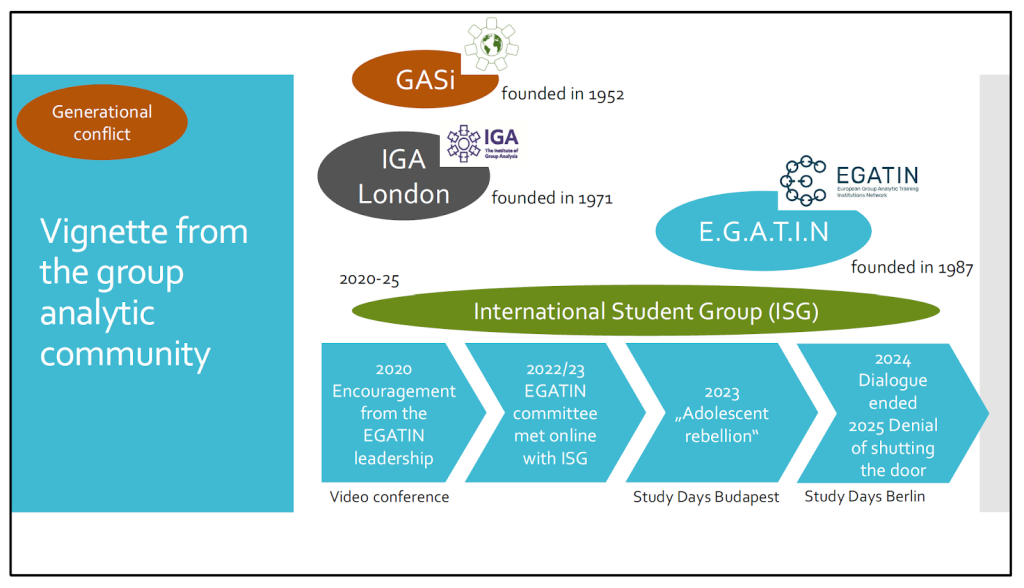
Figure 5. Vignette on generational conflict within the organisation of EGATIN
Conclusion
I would like to end with a constructive vision and an attempt to find an answer to the question: How to create fruitful intergenerational relations? ‘… it may be wise to acknowledge both positions with their striking potential: the knowledge and experience of those who hold history and legacy and the energy and wisdom of the future generations of group analysts who bring insight from the moving foundation matrix. Diversity can be a source of conflict but there is potential for great creativity and development. We are not at war, we can talk and listen to each other, negotiate, and learn from each other.’ (Puschbeck-Raetzell & López Levy, 2022, p.537)
In conclusion, I believe that it is important to not act like the three monkeys in Figure 3 and instead: look, listen, speak up! And work together! ‘The paradox of education is precisely this – that as one begins to become conscious one begins to examine the society in which he is being educated’ (James Baldwin).
The question I tried to engage with in this talk is whether a decolonising lens offers a way of solving generational conflict and serves as a way of utilising student power as a means of rethinking teaching and power structures. I hope that we will have fruitful and illuminating discussions in the future, thank you.
References:
Blackwell, D. (2023a) Decolonizing Group Analysis: What does it mean? Journal of Group Analysis, 58(1), 3-28.
Blackwell, D (2023b) The dialectics of Chat: Privilege, power and institutional racism. Journal of Group Analysis, 56(4): 541-558.
Blackwell, D. & Puschbeck, M. (in preparation) Student power in group analytic training. Journal of Group Analysis.
Foulkes, S.H. (1975) ‘Last Editorial’. Group-analytic Contexts, Vol. 22, February, 2003.
Freire, P. (1970) The pedagogy of the oppressed. New York: The Continuum International Publishing Group.
Kruska, L. & Puschbeck-Raetzell, M. (2024) Die Eltern-Kind-Metapher als Ausdruck von Machtdynamiken an psychodynamischen Instituten. Ein Essay [The parent-child metaphor as an expression of power dynamics at psychodynamic institutes. An essay] Zeitschrift für Individualpsychologie, 49(1), 20-42.
Morbitzer, L. (2024) Der Laios-Komplex und die Begegnung am Dreiweg: Psychoanalytische und kulturwissenschaftliche Untersuchungen. Brandes & Apsel.
Puschbeck-Raetzell, M (2023) Commentary on Dick Blackwells paper on ‘The dialectics of Chat in online large groups’. Journal of Group Analysis, 56(4): 559-569.
Puschbeck-Raetzell, M & López Levy, M (2022) The first ‘hybrid’ Foulkes Lecture Study Day in the history of group analysis. ‘From the couch to the circle to the streets and to the screens’. Group Analysis, 55 (4), 529–538.
Scholz, R. (2022) When foundation matrices move – challenges for a group analysis of our time [45th Foulkes Annual Lecture]. Group Analysis 55(4): 483-497.
Links:
Paulo Freire: https://paulofreireproject.webador.com/the-banking-model
Trevor Noah: https://www.youtube.com/watch?v=QhMO5SSmiaA
Dig where you stand: https://en.wikipedia.org/wiki/Dig_Where_You_Stand_movement