

The Group as a Container: Holding the Center Amidst Collective Trauma – Reflections from the Ubuntu Center for Peace
Program Implementation Manager, Ubuntu Center for Peace
Abstract
This reflective article explores the concept of the group as a “container” for collective trauma in post-genocide Rwanda, drawing on Western group analytic theory and Ubuntu philosophy. Integrating personal narrative with field-based reflections from the Ubuntu Center for Peace, the paper examines how group processes provide emotional holding, restore belonging, and support social repair in contexts of mass violence. Theoretical perspectives from Bion, Winnicott, and Foulkes are culturally translated through Rwandan communal metaphors, illustrating how containment becomes a lived and relational experience rather than an abstract concept. The reflection highlights both the possibilities and challenges of working with collective trauma and emphasizes the importance of culturally grounded group processes in fostering healing and reconciliation.
Introduction / Context
Rwanda is a small country, often referred to as the “Land of a Thousand Hills,” is also a landscape marked by profound resilience. In 1994, the country experienced a genocide against the Tutsi in which nearly one million people were killed within one hundred days. Fueled by decades of ethnic division and hate propaganda, the violence mobilized ordinary citizens to commit mass killings, often against neighbors and family members. Survivors were left with devastating losses and long-lasting psychological wounds, including post-traumatic stress, depression, and profound grief.
In the post-genocide period, national recovery efforts have emphasized justice, unity, and memorialization. While these processes have been essential, emotional and relational wounds remain deeply embedded within individuals and communities. Collective trauma fractured the social “center,” replacing trust with suspicion and connection with silence. Many learned to survive through resilience marked by silence rather than expression. This raises a central question for group analysis in post-conflict contexts: what can hold individuals and communities when the social fabric has collapsed?
Personal Positioning: From Pain to Purpose
I position myself within this work not only as a practitioner and student of group analysis, but also as a survivor of the 1994 genocide against the Tutsi. In July 1994, at the age of seven, I lost my parents, five siblings, and extended family members; only my three-year-old brother and I survived. This early experience left me with deep pain and unanswered questions about violence, humanity, and survival.
Over time, listening to the pain of others allowed me to recognize my own healing path. I discovered a calling to accompany others through processes of listening, understanding, and relational repair. My professional experience in youth rehabilitation and work with vulnerable women, combined with my current role as a psychologist, group analyst student, and Program Manager at the Ubuntu Center for Peace, shapes my understanding of groups not merely as therapeutic settings, but as vital containers for survival, meaning-making, and hope. This personal history informs my engagement with the concept of the group as a container, grounding theory in lived experience.
Collective Trauma in Post-Genocide Rwanda
Collective trauma refers to psychological and relational harm experienced by entire communities following extreme violence such as genocide, war, or forced displacement. In post-genocide Rwanda, this trauma affects survivors, families of perpetrators, former refugees, and subsequent generations. Collective trauma disrupts trust, fractures social bonds, and erodes shared meaning, resulting in a loss of the psychological and cultural “center.”
Many individuals continue to live in prolonged states of fight, flight, freeze, or fawn responses long after the immediate threat has passed. These responses may manifest as anger and aggression, emotional numbness, avoidance, or excessive compliance. Such patterns reflect ongoing attempts to manage overwhelming affect in the absence of sufficient relational containment. In this context, healing cannot be understood solely as an individual psychological process but must be approached as a collective and relational endeavor.
The Group as Container: Theoretical Framework
The concept of the group as a container draws primarily on the work of Winnicott, Bion, and Foulkes. Winnicott’s (1960) notion of the “holding environment” emphasizes the importance of a reliable relational space in which emotional development and repair can occur. Bion’s (1962) theory of containment further describes how unbearable emotional experiences can be received, held, and transformed through relational processes into experiences that can be thought about rather than acted out.
Within group analysis, Foulkes’ (1964) concept of the group matrix provides a framework for understanding how meaning emerges through an interconnected web of communication and relationships. The matrix consists of a foundation layer shaped by shared culture and history, and a dynamic layer formed through present-moment group interactions. Together, these theories illuminate how groups can function as symbolic and emotional containers capable of holding collective anxiety, grief, and fear while fostering new meanings and connections.
Ubuntu Philosophy and Cultural Metaphors
The woven basket (igiseke) as a cultural metaphor for group containment and collective holding
Ubuntu philosophy offers a culturally grounded understanding of relationality that resonates deeply with group analytic concepts of containment. Rooted in the principle “I am because we are,” Ubuntu emphasizes that identity, suffering, and healing are inherently relational. Healing is not an individual achievement but a shared communal responsibility, where one person’s pain and recovery are intertwined with that of others.
At the Ubuntu Center for Peace, Western group analytic concepts are not imported wholesale but translated through local cultural metaphors. The woven basket (igiseke) symbolizes a container formed by many threads, where each voice contributes to the strength of the whole. Collective rituals such as Umuganura, the first-fruits ceremony, reflect shared renewal and mutual contribution. Through such metaphors, abstract theoretical concepts become emotionally resonant and accessible, allowing participants to experience containment as a lived and culturally meaningful process.
Field-Based Reflections from the Ubuntu Center for Peace

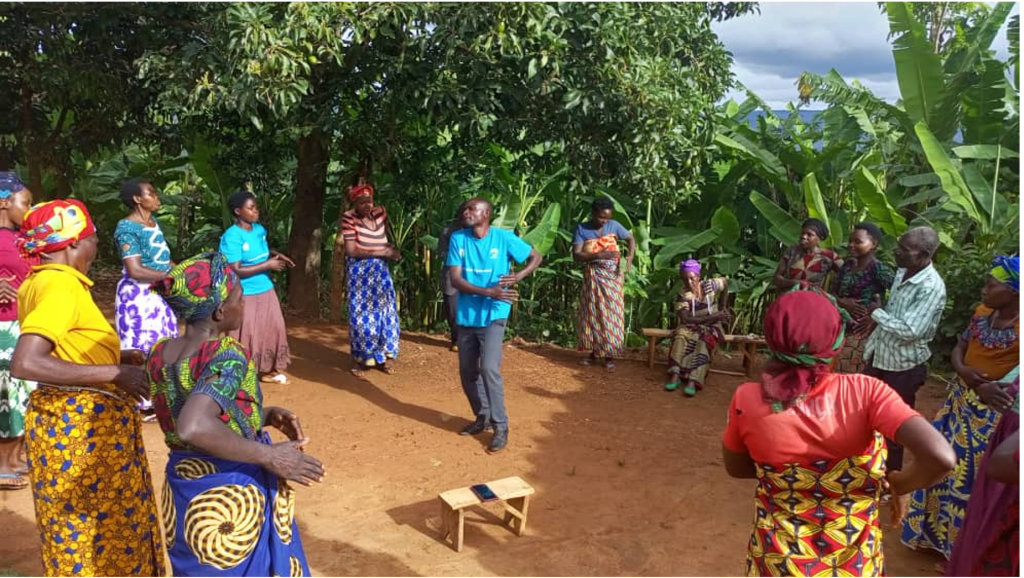
Community-based healing at the Ubuntu Center for Peace is facilitated through small groups of approximately twenty participants over a fifteen-week process. These groups integrate body, breath, and mind practices with storytelling, song, poetry, and silence. Rooted in Rwandan culture, the process gradually moves participants from individual suffering toward mutual support and collective resilience.
Participants frequently describe a shift from isolation toward belonging. One genocide survivor reflected, “I thought my pain was mine alone,” while a former perpetrator shared, “This circle brought back my life; I thought I was a monster.” Such testimonies illustrate how group containment allows individuals to hold unbearable experiences within a shared relational space. Trauma, which isolates and silences, is softened through collective presence, listening, and co-regulation, enabling the gradual reknitting of the social fabric.
Challenges and Ethical Considerations
Working with collective trauma presents significant challenges, including the risk of retraumatization, resistance, and deep mistrust among participants (Herman, 1992; van der Kolk, 2014). Facilitators function simultaneously as containers and witnesses, holding emotional intensity while remaining attuned to cultural norms surrounding silence, strength, and the expression of grief (Dalal, 2002).
Trauma is not located solely within individual minds but within the “social body.” Embodied and relational practices support participants in accessing untold stories and regulating overwhelming affect through co-regulation (Schore, 2003; Porges, 2011). Ethical practice requires respect for participants’ readiness for dialogue, particularly in contexts where survivors and perpetrators may not yet be prepared to share the same group space. Parallel pathways toward safety and healing must be honored.
Conclusion: From Containment to Social Repair
Containment is not an end in itself but a foundation for reconnection, action, and social repair. At the Ubuntu Center for Peace, group processes often extend beyond the therapeutic space into broader community reconciliation initiatives. While national policies promote unity at a structural level, healing unfolds primarily through emotional and relational processes held within safe group containers.
When group analytic theory is culturally translated and grounded in communal values such as Ubuntu, groups can become powerful spaces for transforming collective trauma into shared humanity. Through connection rather than force, the social center can be gently restored, allowing individual healing to contribute to collective renewal.
These insights invite continued reflection on how groups function as bridges between personal healing and social repair in contexts marked by collective violence. They also raise questions about the quality of connection within our professional and community groups, and the extent to which they offer genuine spaces of safety, recognition, and belonging. Across cultural contexts, the principles of Ubuntu may take varied forms, yet the underlying call remains the same: to hold one another’s pain with presence, responsibility, and care.
References
Bion, W. R. (1962). Learning from experience. London: Heinemann.
Dalal, F. (2002). Race, colour and the processes of racialization: New perspectives from group analysis. London: Brunner-Routledge.
Foulkes, S. H. (1964). Therapeutic group analysis. London: Allen & Unwin.
Herman, J. L. (1992). Trauma and recovery. New York: Basic Books.
Hinton, D. E., & Kirmayer, L. J. (2013). Local responses to trauma: Symptom, affect, and healing. Transcultural Psychiatry, 50(5), 607–621.
Porges, S. W. (2011). The polyvagal theory: Neurophysiological foundations of emotions, attachment, communication, and self-regulation. New York: Norton.
Schore, A. N. (2003). Affect regulation and the repair of the self. New York: Norton.
van der Kolk, B. (2014). The body keeps the score. New York: Viking.
Weinberg, H. (2007). So what about culture in group analysis? Group Analysis, 40(2), 195–206.
Winnicott, D. W. (1960). The theory of the parent–infant relationship. International Journal of Psycho-Analysis, 41, 585–595.