

Uprooting and Rewilding: Irish Culturally Sensitive Psychotherapy
Abstract:
Ideas in this paper were seeded through group analytic training, community work experiences over the last decade and art psychotherapy practice. They invite deeper dialogue and seed a fundamental invitation: to create psychotherapy that honours where people come from and what they carry, or risk invalidating lived realities and perpetuating erasure. This is work of collective liberation and reparation—breaking cycles for lineages.
This paper sees Irish culturally sensitive psychotherapy as essential practice. Generic mental health approaches pathologise natural responses to cultural trauma whilst erasing the contexts producing suffering—Irish people need therapy that honours their specific cultural, historical, and transgenerational realities. All people should have access to culturally conscious therapy that honours where they come from and what they carry.
The paper walks the Irish cultural landscape shaped by colonisation, An Gorta Mór, institutional abuse, migration, and inherited silence. Central is cultural competency rooted in humility and “not knowing”—recognising that some experiences cannot fully be explained to those outside the culture. For many Irish people, particularly diaspora in Britain, group therapy offers essential healing: “the harm was done by a group, so we need groups to ultimately feel better.” Groups become spaces to break cultural silence, humanise shame belonging to systems rather than individuals, and reconnect with ancestral traditions.
The paper positions art psychotherapy and gaeilge as restoration of cultural traditions and creation of new languages for expressing what colonisation attempted to silence. It examines how neoliberal mental health frameworks commodify suffering whilst perpetuating patterns of silencing found in Irish institutional abuse, calling for organisational cultures that recognise Irish therapists’ navigation of anti-Irish sentiment.
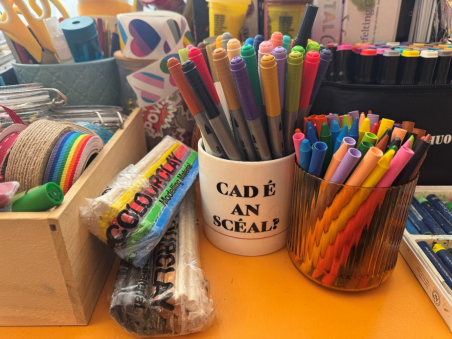
Figure 1 Photo of Aisling Fegans art therapy room, used for Irish art psychotherapy in Nottinghamshire. Nov 2025.
Introduction
Being Irish is different from being English. Yes, it’s 2025 and yes, I am having to say this. Why? Because when Irish people are suffering with symptoms of trauma, anxiety, panic and depression, the therapeutic approach offered is almost always one-size-fits-all. Time-limited, solution-focused therapies provide generic strategies to manage symptoms but fail to address the underlying causes of mental suffering. They do not honour where people come from, what people carry, or the cultural and historical forces that shape Irish experience.
This paper explores what Irish culturally sensitive psychotherapy is, why it matters, and how it offers a different path—one rooted in cultural awareness, historical consciousness, and deep respect for the Irish experience. It examines individual and group therapeutic approaches, the lasting impact of institutional abuse, the role of the culturally conscious psychotherapist, organisational responsibilities, and the place of Irish language and art in healing work. Throughout, it argues that culturally sensitive psychotherapy is not merely beneficial but essential for Irish people seeking to understand and heal from the specific traumas, silences and inheritances that are uniquely Irish.
Understanding Psychodynamic Psychotherapy in an Irish Context
Psychodynamic psychotherapy explores how unconscious thoughts and past experiences influence present feelings, behaviours, and relationships. Irish culturally sensitive psychotherapy takes this further. It offers Irish people sustained, deeply human engagement to unearth the deep-seated origins of mental distress and understand how the past continues to shape the present.
Symbolically, we are picking up shovels and digging deep into culturally, socially and historically rich soil—to uproot knowledge and understanding.
This work is led by the client’s personal desire, curiosity, capacity, and knowledge learned through lived experience. The therapeutic relationship between the therapist and client is an essential element of the work. Irish culturally sensitive psychotherapy is specialised work that requires long-term commitment from experienced psychotherapists, a robust frame and trust in the process.
The Irish Cultural Landscape
Psychotherapy for Irish cultural identity involves recognising its unique impacts, such as the effects of historical trauma like colonisation, institutional abuse and the complexities of migration. Irish culturally sensitive psychotherapy offers a conversational and nonjudgemental space with consistency and predictability, supported by an experienced, culturally conscious psychotherapist. Over time, trust builds. The therapy moves at a human pace— the pace of the seasons, of storytelling by the fire and of walking the land.
This is an explorative and transformative process. Through deepening dialogue and awareness, Irish culturally sensitive psychotherapy acknowledges the cultures present in families, social groups, communities and workplaces alongside Irish cultural and ancestral history, custom, spirituality, and the arts. It holds space for trauma and injustices suffered through institutional abuse and statutory failure, recognising how colonisation has taken so much—including An Gorta Mór with its million dead and two million displaced, and the ongoing wound of the Northern Irish border.
This work addresses the transgenerational impact of political and domestic violence, the culture of silence we inherited captured in the phrase “whatever you say, say nothing,” and trauma passed down like heirlooms we never asked for. It examines the ongoing legacy of colonisation including how we internalised the oppressor’s voice until it became our own, the linguistic genocide that stole our mother tongue, and the revival of Irish language as our words return home. It recognises the profound cultural significance of land—with ‘thirty-two words for field’ as Manchán Magan reminded us and housing, understanding how the current crisis resonates with historical dispossession. (Magan 2024)
The therapeutic space holds experiences of gender-based violence in the Irish context, generational waves of emigration and the experience of migrating, diasporic experiences of being Irish everywhere and nowhere, relationships with Catholicism and spiritual abuse, and the social amnesia and oppression that create shame we were never meant to carry. It acknowledges anti-Irish sentiment past and rising, hidden identities, second and third generation struggles with belonging, and discrimination facing the Irish Traveller Community—our own people pushed to the margins. The phrase “No blacks, no dogs, no Irish” captures historical exclusion, while the hidden Irish in Britain who changed their names to disguise their heritage reveal its lasting impact. The work holds intersecting oppressions including misogyny, racism, homophobia, transphobia, and ableism within Irish contexts.
The work encompasses contemporary realities: parenting across cultures, caring for elderly parents while stretched across waters, isolation facing new parents, experiences of dementia care, bereavement and death, alcoholism and substance misuse, misdiagnosis, and the loss of collective rituals—particularly for diaspora who die far from home ground.
This is not an exhaustive list. Furthermore, it is not enough for psychotherapists to know these themes and call themselves Irish culturally sensitive, Cultural competency can be felt by the client. It involves working with cultural consciousness, attunement, lived experience, and supervision support. It requires respect for what Irish people have endured and survived.
Irish Culturally Sensitive Group Therapy
Culture shapes who we are in a group. There is so much unspoken in Irish society and within Irish diasporic experiences. Many Irish people were taught not to talk in groups. “Whatever you say, say nothing.”
In conversations about therapy, sometimes Irish people communicate that groups feel safer than individual psychotherapy—because of past trauma and historical misuse of power by individuals in authority. Other times, people say the opposite – they think ‘no’ to group therapy because of trauma and fear rooted in past group experiences. People can feel enormous amounts of shame about their thoughts, feelings, and experiences. Shame has become lodged in the individual when really, it belongs to shameful systems and culture in the wider collective.
This is a whole society issue, so to requires a whole society response. A group response. The harm was happened within a group context, so we need groups to ultimately feel better. We don’t need confession boxes. Our ancestors knew this—they gathered for wakes, for céilís, for storytelling. They knew the healing power of being together.
Creating Safety in Group Therapy
The process of entering group therapy moves at the person’s pace so they can establish a sense of trust and understanding about what the group is about before entering. In group, we are creating a culture of mutual respect and support for each other through conversations. It’s about learning to trust and communicate authentically in the company of others. Speaking through cultural silence, group members express relief and a deep sense of togetherness. We are destigmatising issues about mental health… about life.
Groups form microcosms of society. Dynamics arising in group therapy can echo our personal, social, cultural and political context. Group therapy therefore offers space to explore ourselves and the world around us. When stories connect, even in difference, it can be deeply affirming and validating. Social, cultural and relational patterns become visible in the group. Behavioural patterns repeat and have opportunity to be explored. Differing perspectives are important and acknowledged. Conflicts can be talked about and thought through in safe ways—ways Irish elders were often denied.
The Collective Healing Process
In Irish culturally sensitive group therapy, we are humanising the social space. The therapy becomes the group’s story. Group members find their place within it—like finding your place in the circle, around the fire. Together we
think about what has been seeded from the culture we have been part of. For example, what is the impact of culture on our sense of safety, on behaviour, ability to talk, relationships, on how we eat, on how we love or experience love?
Connecting with others who understand the Irish context can be a deeply validating experience for group members. Group members often encourage each other to talk. Some people cannot talk with their families because of cultural barriers developed through generations. Sometimes, group therapy is the first time a person has felt listen to, heard, and understood by a group.
Weaving personal stories, group members are integrating their sense of self within a wider cultural context. We are reconnecting with core cultural knowledge in the Irish tradition: storytelling (our oldest art), the land and annual seasonal gatherings like Samhain, Brigid’s Day or the solstice at Newgrange Passage Tomb—the rhythms our ancestors lived by. We are remembering. We are creating new association. We are rewilding. With this, group therapy offers a reparative experience where group members can begin to trust and let go of shame. Irish culturally sensitive group therapy can be a lifeline, particularly for isolated diaspora in Britain. I was once told by a group member that, “For Irish people, being together is the therapy.” Our ancestors would have understood this deeply.
Irish Institutional Abuse: Recent History, Lasting Impact
The last Magdalene Laundry in Ireland closed on 25 October 1996 (Justice for Magdalenes Research, 2017). The last mother and baby home in the Republic of Ireland to close was the one at Bessborough in County Cork, which shut its doors in 1998 (Mother and Baby Homes Commission of Investigation, 2021). In Northern Ireland, the last institution to close was Marianvale in Newry, which closed in 1984 and the last mother and baby home in Northern Ireland closed in 1990 (Independent Panel Truth Recovery NI, 2024).
This is recent history. This is living memory. Survivors, their children, and grandchildren continue to feel the lifelong, transgenerational effects of institutional abuse. The weight of what they experienced and continue to experience is not for them to carry alone. Wider society has a responsibility and role to play in social and cultural change. We all have a responsibility to bear witness, to remember and refuse to forget. In January 2021 (yes, 25 years later), Taoiseach Micheál Martin issued an apology, following the publication of the investigation into institutional abuse in Ireland’s Mother and Baby Homes. He said:
“We had a completely warped attitude to sexuality and intimacy and young mothers and their sons and daughters were forced to pay a terrible price for that dysfunction… As a society we embraced judgementalism, moral certainty, a perverse religious and social control which was so damaging… One hard truth in all of this is that all of society was complicit in it.” (Martin, 2021, cited in The Irish Times, 2021)
The Living Legacy
The abuse was in the social fabric. It was cultural. It was in the very air people breathed. The culture that enabled institutional abuse to exist didn’t disappear overnight when these premises closed. It lived on. Its legacy is living on today. As Irish people, we all have a relationship with this suffering. We all inhabited the same culture of dehumanisation and silence. Redressing, reparation and healing therefore involves us all. This is our collective work, collective reparation.
Often Irish people think these horrific social injustices have nothing to do with them. People say they didn’t know about it. But why didn’t they know? Irish bodies knew. It was in behaviour, inaction and ways of being in the world. It was in the silences, the secrets kept and the questions never asked. Why now is there a block for people when they try to think about how the culture impacted people en masse?
Not recognising the significance of culture, can be a form of social amnesia. Avoiding difficult conversation leaves us stuck, unable to progress socially in open and authentic ways. Continuing in this way, we are continuing to collude with silence and erasure. Some people say, the culture didn’t affect them —“Sure, I’m grand.” How can this b’ grand? Its anything but grand, or maybe I sound say G.R.A.N.D. – Guarded, Really Anxious, Not OK, Disavowing. As Indian
writer and speaker Jiddu Krishnamurti is often quoted as saying, “It is no measure of health to be well adjusted to a profoundly sick society.” (Krishnamurti, cited in Vonnegut, 1975)
The Role of the Irish Culturally Sensitive Psychotherapist
Irish culturally sensitive psychotherapy is hard work and not everyone wants to do it or go there. Not everyone can go there. But the experienced Irish culturally conscious psychotherapist knows what ‘there’ means. They know the kinds of issues that lurk beneath the surface for the Irish population, the risks that might be involved and the active, human participation needed for the work. They know the territory because they have walked it themselves.
Maintaining Evenly Distributed Attention
For the person accessing psychotherapy, the willingness to explore, consciousness and capacity can change from one moment to the next. Therefore, it is important the psychotherapist maintains evenly distributed attention between what is happening in the present for the client, deeper-rooted themes underneath, as well as what is happening for them in their human experience in the role as psychotherapist. This is highly skilled, trauma-informed work. This is sacred work.
Trauma is brutal. It is violent and it needs to be treated with great care—the kind of care people deserved but often didn’t receive. The defences we have built up to protect our psyches are there for a reason. They protect our minds from unbearable thoughts and feelings, and psychotherapists should treat them with the highest respect. At times, psychotherapists might actively encourage clients towards places of safety to avoid re-traumatisation.
Cultural Competency and Not Knowing
There is so much unspoken, invisible emotional labour that happens for Irish people in Britain, particularly around cultural issues. In the mental health industry, the nature of what an Irish person has experienced socially, culturally and transgenerationally is often overlooked and neglected. Sometimes, cultural differences are not known or cannot be explained to people who have not inhabited the culture.
But the culturally conscious psychotherapist knows this—is sensitive to cultural differences and is aware they don’t know. It’s ok not to know. This humility and openness is how an authentic dialogue begins. This is how trust is earned. Culturally sensitive work understands the value of listening before speaking; of making space for what needs to be said.
Organisations and Systems
Organisations working with social justice and cultural consciousness need to take care of their cultures—collectively, together as a group. This also applies to training institutions offering culturally conscious, learning environments. Maintaining open, transparent, and reciprocal communication is an essential part of maintaining a healthy organisational culture. It is essential that organisational operational systems are stable, predictable, containing and well held. This stability, certainty and security is what underpins and anchors trauma-informed psychotherapy. This is the foundation—solid ground after generations of shifting sands.
Avoiding Hostile Cultures
Without warmth in working relationships, clear boundaries and a robust psychodynamic frame, hostile cultures can easily take root within organisations. In the Irish context, this is particularly dangerous. Organisational cultures of fear, hostility, shaming, policing, scapegoating, exclusion and silencing mirror the very patterns found in the
mismanagement and abusive cultures of Irish institutions. These dynamics risk destabilising the work itself. When left unaddressed, poor working relationships can seep into decision-making and judgement.
Over the past decade, accessing psychotherapy within mainstream mental health services has become increasingly difficult, driven by factors such as the privatisation of the NHS and the rising influence of corporations in healthcare. These trends prioritise profit over patient care, further marginalising those who seek support and highlighting the urgent need for a more humane and equitable approach to mental health services. Similar to the gentrification process in housing, where long-term psychotherapy once thrived, these services now risk becoming soulless, driven by tick-box policies rather than the genuine needs of the community. Top-down authoritarianism in organisational management dehumanises workers, exemplifying a culturally neoliberal, exploitative, and extractive mindset that disregards the inherent value of individuals. Human suffering cannot be commodified or capitalised upon. Thoughtlessness and silence on these matters make us complicit.
This sets the stage for a troubling shift: quick-fix, short-term therapy options begin to seem appealing due to their perceived cost-effectiveness and profitability when delivered en masse. However, viewed through a cultural lens, offering standardised therapies for anxiety without meaningful exploration of deeper, culturally relevant psychotherapy risks stifling critical thought. From a social justice perspective, addressing only surface-level symptoms while neglecting the underlying cultural context constitutes tacit complicity in mass avoidance and fostering a culture of silence that perpetuates harm.
At times, Irish psychotherapists may struggle to recognise or articulate these cultural dynamics because we are enmeshed in them and failing to engage in our own reflective work to understand our positionality. When we opt for convenience over depth, we inadvertently perpetuate the very patterns we claim to oppose, ultimately becoming what we sought to resist.
Maintaining Organisational Health
Great efforts must be made in organisations to keep issues around group dynamics conscious—to avoid acting things out. This ensures organisational culture stays healthy. For Irish psychotherapists, many of us have experienced anti Irish sentiment during our work and training experiences, particularly in Britain. In the workplace, Irish cultural sensitivity means feeling safe enough to talk openly (especially about concerns) and having trust in the systems that support the work. Robust and consistent supervision spaces are essential to maintain the quality and safety of therapeutic practice.
Looking after our wellbeing as psychotherapists and the wellbeing of our colleagues is vital when delivering safe and effective healthcare. Tending to the wellbeing of psychotherapists maintains the capacity to think clearly, ensures the long-term sustainability of in-depth, therapeutic work and helps reduce the risk of burnout and vicarious trauma. We cannot pour from an empty cup. Our Irish ancestors knew this. They knew about rest and about letting the land lie.
Gaeilge agus Art Psychotherapy
In Gaeilge (the Irish language) we say, “Tá brón orm” meaning sadness or sorrow is on me. Whereas in English we might say, I am depressed. But you are not depression. There is an acknowledgement in the Irish tradition that sadness is environmental. It is coming from the outside. It is on you. Perhaps it can lift—like weather, like seasons changing.
I often wonder if particular kinds of suffering can only be expressed within the knowledge of the Irish language. Maybe we are trying to describe something that is deeply visceral. Maybe some truths can only be spoken in our mother tongue, the language our ancestors dreamt in.
When Words Are Not Enough
All art is a conversation and it is part of dialogue with the self, others and the world. In the absence of knowing, art can enable us to access what lies beneath. Unconscious processes within artmaking can act as touch stones towards truth. The art and art making process are always listening – meaningfully and analytically.
As an Irish art psychotherapist, I know that sometimes there are simply no words—not in English or as Gaeilge. Art psychotherapy (also known as art therapy) uses creative practices like drawing, painting, collage and sculpting to express feelings and experiences that are difficult to put into words. This form of therapy is not dependent on spoken language and can be particularly useful for people who have experienced trauma—personally or transgenerationally. Engaging in an art process can be safer than using words.
In Irish culturally sensitive art psychotherapy, people talk and make art together. They share stories, sometimes photographs, sentimental objects and sing culturally significant songs—the songs our elders sang. Art making involves a curiosity about the world, making change and creating something new. Art can happen consciously or spontaneously, without premeditated thought. Transformation brings an image to the surface. A rugadh an ealaín. Tá an ealaín beo. (The art is born. The art is alive.)
Sometimes the art process itself—like the quality of mark making—will hold the quality of what cannot be spoken about. It doesn’t have to be named. It can be felt and understood in a place beyond words—the place where culture speaks to us. Together we are creating a new language. Deepening dialogue. Through the art process, it is possible to acknowledge the past while activating the capacity to respond in the present. We are restoring and carrying forward cultural traditions held within the arts—like our ancestors did within illuminated manuscripts, Sheela Na Gig stone sculptures or the Celtic knots that have no beginning and no end.
Why Irish Culturally Sensitive Psychotherapy Matters
Irish culturally sensitive therapy is important. It matters to Irish people, to Irish ancestors and to future generations. When psychotherapy is culturally sensitive, the body and mind can begin to relax into itself. Understanding can be felt. It is deeply meaningful and sustainable. It recognises that what mainstream mental health often pathologises as individual suffering may in fact be natural human responses to cultural trauma, systemic oppression, and intergenerational pain. It recognises that pain has a context, a history and a reason.
This work is for everyone. Irish culturally sensitive psychotherapy should be accessible to people of all classes and social backgrounds. Working-class Irish people, middle-class Irish people, those living in poverty, those with wealth — all have been shaped by the same cultural forces, the same historical traumas and the same silences. Our ancestors all carried the weight of colonisation, all navigated the aftermath of An Gorta Mór and all learned the same silences. Class itself is part of the cultural context that needs to be understood and explored. Cultural sensitivity means recognising how class intersects with Irish identity, how economic oppression compounds cultural trauma, and how shame operates differently—yet persistently—across class boundaries.
Unless we are speaking openly and honestly about how culture has affected us, we are doing a disservice to the Irish population. We are invalidating people’s lived realities and engaging in a kind of performance. Masking en masse isn’t resilience. It’s oppressive and silencing. It’s erasure. Our ancestors wore masks to survive; we honour them by removing ours.
Irish culturally sensitive psychotherapy is a deeply personal and relational process. It is active and reflexive. It cannot be done with off-the-shelf, manualised therapies. Culturally sensitive psychotherapy is humanising, destigmatising and deepening understanding about the root causes of mental distress. It’s an active reclamation of agency and narrative. For the collective, Irish culturally sensitive psychotherapy is a movement towards liberation, redress and reparation. This is the work of healing not just ourselves, but our lineage. This is the work of breaking cycles.
A Final Note
I want to end by saying — no one person can define what Irish culturally sensitive psychotherapy is because there are so many variations in what it means to be Irish. There isn’t a formula. There never was. We are Cork and Kerry, Dublin and Derry, Galway and Mayo. We are first generation and fifth. We are Irish speakers, English speakers and bilingual. We are deeply spiritual, of no faith and religious. We are the ones who stayed and the ones who left, the ones who came back and the ones who didn’t. Are you going home? We are the ones who don’t know where home is. We are all of this and more.
Psychotherapists do not get to decide if a space is culturally sensitive and safe. The person accessing therapy decides this. They feel it. They know it in their bones—the way our ancestors knew the coming weather, the land and sea.
In writing, I hope to open a conversation about Irish culturally sensitive psychotherapy so clients, psychotherapists, teachers and organisations can recognise its deep significance—to honour what Irish people have survived and carried, and to break the silence in a way that honours those who had to keep it.
References
Magan, M. (2024) Thirty-Two Words for Field: Lost Words of the Irish Landscape. Dublin: Gill Books.
Independent Panel Truth Recovery NI (2024) Marianvale Mother and Baby Home, Newry. Available at: https://www.independentpanel.truthrecoveryni.co.uk/node/72 (Accessed: 25 November 2025).
Justice for Magdalenes Research (2017) About the Magdalene Laundries. Available at:
https://jfmresearch.com/home/preserving-magdalene-history/about-the-magdalene-laundries/ (Accessed: 25 November 2025).
Martin, M. (2021) ‘State Apology and Action Plan’, Speech delivered in Dáil Éireann, 13 January. Cited in The Irish Times (2021) ‘State apology: Taoiseach’s full statement on Mother and Baby Homes’, The Irish Times, 13 January. Available at: https://www.irishtimes.com/news/social-affairs/state-apology-taoiseach-s-full-statement-on-mother and-baby-homes-1.4457328 (Accessed: 25 November 2025).
Mother and Baby Homes Commission of Investigation (2021) Final Report of the Commission of Investigation into Mother and Baby Homes. Dublin: Government of Ireland.
Vonnegut, M. (1975) The Eden Express. New York: Praeger Publishers.